

Winter Trucking Safety & Compliance: What Drivers Must Know Before Hitting Snow and Ice This Season
Updated: Feb 27
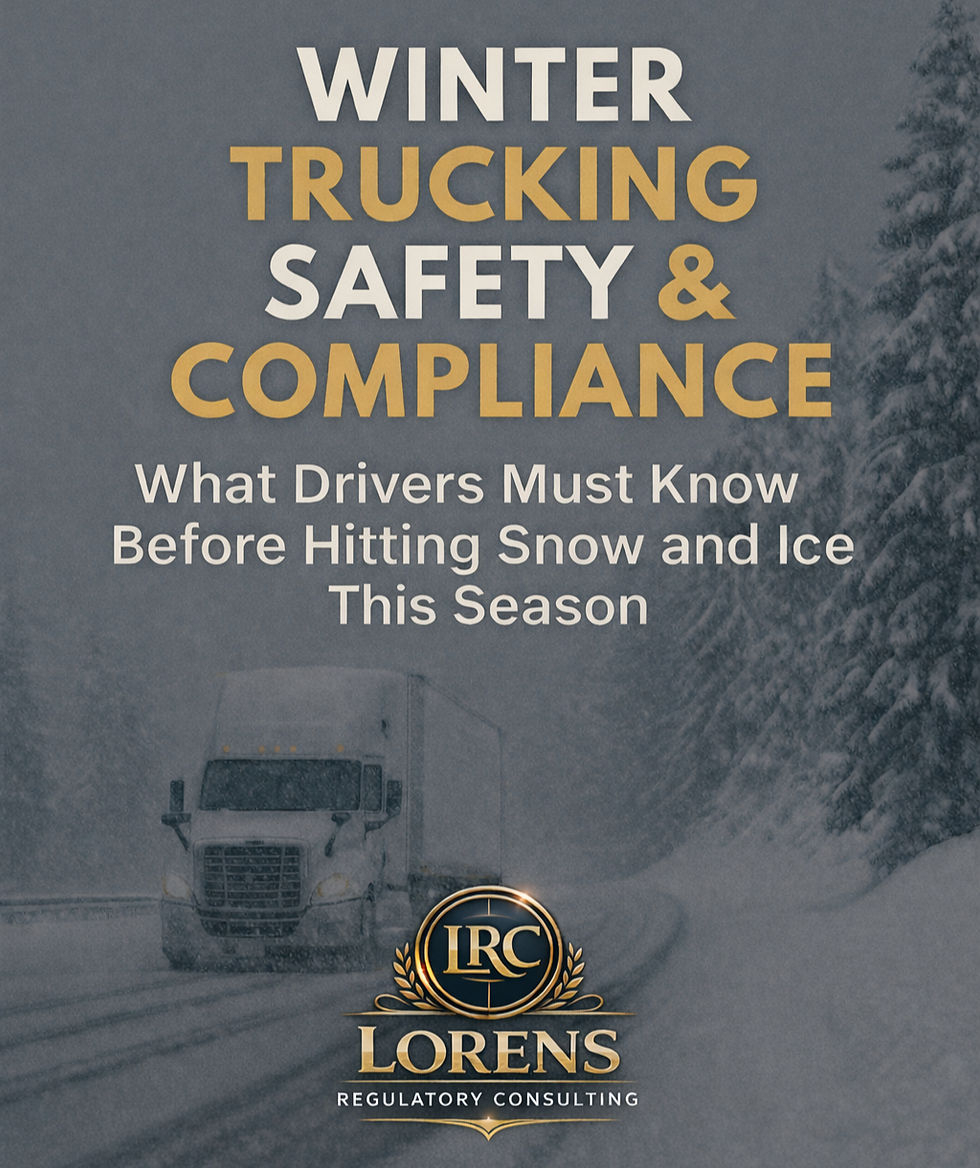
Winter is the most unforgiving season in American trucking. Snow, ice, low visibility, emergency speed restrictions, and chain laws turn routine miles into high-risk operations. Beyond the obvious safety concerns, winter also exposes drivers and fleets to serious compliance liabilities — FMCSA violations, insurance denials, and operational shutdowns.
This article outlines the real-world risks of winter operations and how truckers, owner-operators, and small fleets can stay compliant and protected.
1. Winter Conditions Change Everything
Even experienced drivers misjudge conditions in snow and ice. A minor mistake in summer can escalate into a catastrophic failure in winter.
Critical hazards include:
Black ice, often invisible even under daylight
Stopping distances up to 10× longer
Jackknife and trailer swing caused by traction loss
Sudden speed restrictions and closures due to state emergency orders
Mandatory chain requirements in states such as Colorado, Wyoming, Oregon, and California
And here’s the part many overlook: FMCSA can hold a motor carrier liable for allowing a driver to operate in unsafe conditions, regardless of pressure, deadlines, or dispatch instructions.
2. Compliance Issues That Drivers Commonly Get Wrong in Winter
a) Misuse of the Adverse Driving Conditions Exception
Under §395.1(b), this exception is often abused and quickly flagged during inspections.
You may only claim it when:
The condition was unexpected,
It was not foreseeable before departure,
The extension is clearly justified in your electronic logs.
If any of these elements is missing, enforcement officers typically cite it as misuse.
b) Pre-Trip and Post-Trip Inspection Gaps
Winter inspections face stricter scrutiny, especially for:
Tire tread depth
Brake adjustment
ABS warnings
Lights and reflectors obstructed by snow
Frozen air lines
Wiper function and washer fluid levels
If you cannot defend your DVIR, you’re exposed.
c) Chain Law Compliance
Ignoring chain laws is not a simple fine.
Insurers may deny claims if the driver failed to comply with state-mandated traction requirements.
d) Failure to Stop for Hazardous Conditions
FMCSA §392.14 makes it clear:Drivers must stop when conditions become unsafe — period.
A driver continuing in dangerous conditions can create liability for both the operator and the carrier.
3. Safety Protocols That Should Never Be Optional
Reduce Speed — Seriously
Most winter crashes come from drivers assuming they “still have enough traction.”If no one is passing you, you might still be too fast.
Increase Following Distance
Minimum 7–14 seconds in snow or ice. Anything less is a gamble.
Avoid Sudden Movements
No hard braking
No aggressive steering
No abrupt throttle
Smooth inputs maintain traction; abrupt inputs destroy it.
Use Jake Brake With Caution
On icy surfaces, the jake can break traction instantly. Know when to disable it.
Clear Snow Properly Before Moving
DOT can cite drivers for:
Snow or ice on the trailer roof
Covered reflectors or lights
Obstructed license plates
If ice dislodges and damages another vehicle, you or your company may be held liable.
4. Insurance Exposure: The Hidden Winter Threat
Insurers know winter increases accidents — and they also know most winter accidents involve preventable factors.
Common reasons for claim denials or reductions:
Ignoring chain laws
Operating despite weather advisories
HOS logs that don’t match conditions
Poor equipment maintenance
Speed “not appropriate for conditions”
Negligence is a powerful legal argument, and carriers lose these cases every year.
5. How Lorens Regulatory Compliance Helps Drivers and Fleets Stay Winter-Ready
Lorens Regulatory Compliance supports truckers and small fleets with compliance-focused services designed for real operational challenges.
We assist with:
Compliance audits (FMCSA, HOS, documentation)
Winter readiness checklists and protocols
Insurance review and risk evaluation
Safety policies for small fleets
Emergency procedures documentation
Training material for new and seasonal drivers
Our approach is practical:
Reduce avoidable violations, strengthen documentation, and protect drivers from preventable legal or financial exposure.
6. Final Message: Winter Driving Is a Technical Decision — Not a Brave One
Professional drivers know courage doesn’t keep a truck on the road — discipline does.
Every decision in winter must be grounded in safety data, compliance requirements, and operational responsibility. When in doubt, stop. When conditions deteriorate, document. When safety is compromised, communicate.
And if your operation needs support preparing for winter or improving compliance practices, Lorens Regulatory Compliance is here to help. #WinterDriving #TruckDrivers #OwnerOperator #TruckingSafety


Comments